Wanas Blog
Simplified medical articles from certified specialists and doctors help you understand your psychological condition and make better decisions.
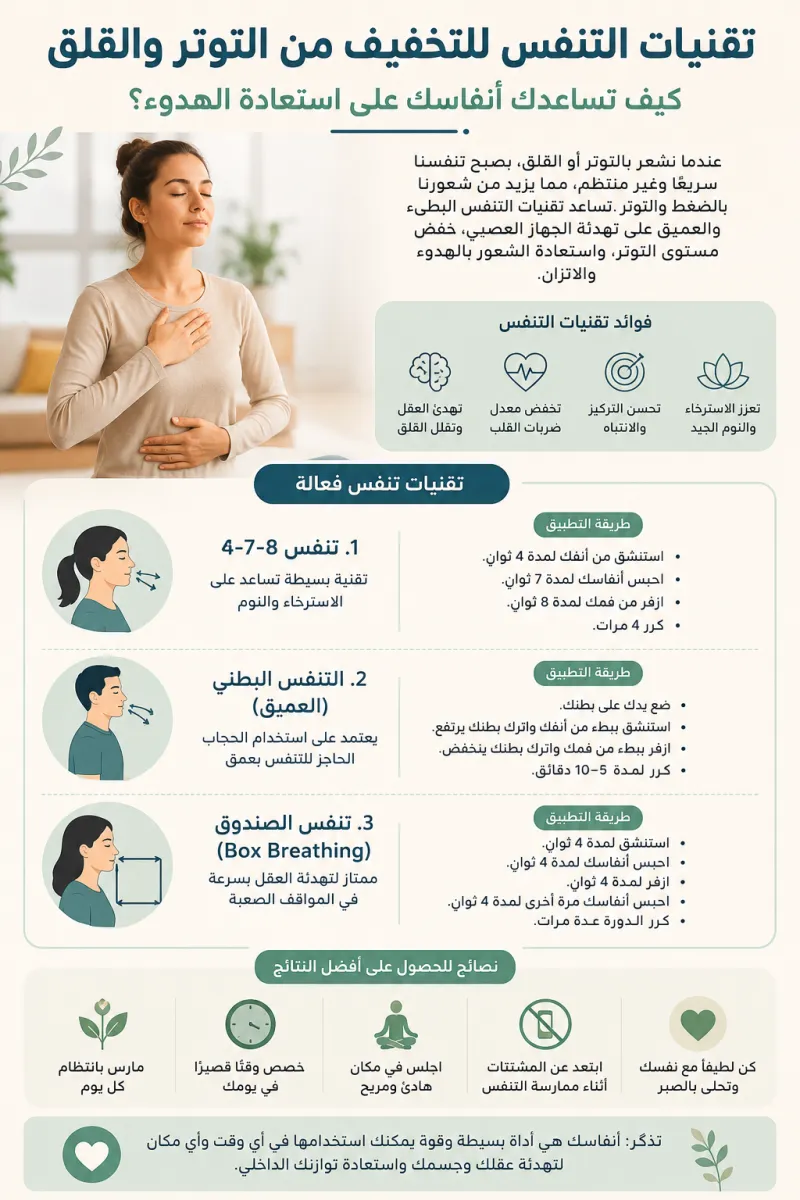
Breathing Techniques to Reduce Stress


Breathing Techniques for Stress and Anxiety Relief: How Your Breath Can Help You Regain Calm
In our daily lives, we face many situations that can trigger stress and emotional pressure, whether at work, school, or in personal relationships. When we become stressed, our breathing often becomes faster and more shallow, sending signals to the body that there is a threat or danger.
The good news is that breathing is not only an automatic process necessary for survival—it can also be used as a powerful tool to improve mental well-being and restore a sense of calm and control.
Research has shown that deep breathing techniques can activate the parasympathetic nervous system, which is responsible for the body's relaxation response. This helps lower heart rate, reduce stress, and promote emotional balance.
How Does Breathing Affect Stress?
When we experience stress, the body's "fight-or-flight" response becomes activated. As a result, heart rate increases, muscles become tense, and breathing becomes rapid and shallow.
In contrast, slow and controlled breathing sends signals to the brain that the body is safe, helping calm the physiological stress response and reduce feelings of anxiety.
Benefits of Breathing Exercises for Mental Health
Regular breathing exercises can help:
-
Reduce stress and emotional tension.
-
Ease symptoms of anxiety.
-
Improve focus and concentration.
-
Promote relaxation and emotional balance.
-
Enhance sleep quality.
-
Support emotional regulation and resilience.
Diaphragmatic Breathing
Diaphragmatic breathing, also known as belly breathing, is one of the simplest and most effective relaxation techniques.
How to Practice:
-
Sit or lie down in a comfortable position.
-
Place one hand on your chest and the other on your abdomen.
-
Inhale slowly through your nose, allowing your abdomen to rise more than your chest.
-
Exhale slowly through your mouth.
-
Repeat for 5 to 10 minutes.
This technique helps calm the nervous system and significantly reduces stress levels.
The 4-7-8 Breathing Technique
This technique is commonly used to promote relaxation, reduce anxiety, and improve sleep quality.
How to Practice:
-
Inhale through your nose for 4 seconds.
-
Hold your breath for 7 seconds.
-
Exhale slowly through your mouth for 8 seconds.
-
Repeat the cycle four times or as needed.
This method helps slow down nervous system activity and encourages a sense of calm.
Box Breathing
Box breathing is frequently used by athletes, military personnel, and professionals working in high-pressure environments to improve focus and manage stress.
How to Practice:
-
Inhale for 4 seconds.
-
Hold your breath for 4 seconds.
-
Exhale for 4 seconds.
-
Hold again for 4 seconds before the next inhale.
Repeat the cycle several times until you feel more relaxed and centered.
When Can You Use Breathing Exercises?
Breathing techniques can be practiced almost anywhere and at any time, including:
-
Before an important meeting or exam.
-
During moments of anxiety or stress.
-
Before bedtime.
-
After a demanding day at work.
-
When dealing with frustration, anger, or emotional overwhelm.
Tips for Getting the Best Results
-
Practice breathing exercises daily, even when you are not feeling stressed.
-
Choose a quiet and comfortable environment.
-
Focus your attention on the movement of your breath.
-
If your mind wanders, gently bring your attention back to your breathing without judgment.
When Should You Seek Professional Help?
Although breathing exercises can be highly effective for managing everyday stress, they are not a replacement for professional support when anxiety or stress becomes severe, persistent, or begins to interfere with daily life.
A psychologist or psychiatrist can help identify underlying causes and develop an appropriate treatment plan tailored to your needs.
Conclusion
Breathing is a simple, free, and accessible tool, yet it has a profound impact on both mental and physical health. By practicing deep breathing techniques regularly, you can reduce stress and anxiety, improve concentration, and cultivate a greater sense of calm and emotional balance.
Sometimes, just a few minutes of mindful breathing can be enough to help you regain control and navigate life's challenges more effectively.
References
-
American Psychological Association (APA). Stress Management and Breathing Techniques.
-
Harvard Health Publishing. Relaxation Techniques: Breath Control Helps Quell Errant Stress Response.
-
National Center for Complementary and Integrative Health (NCCIH). Relaxation Techniques for Health.
-
Mayo Clinic. Stress Relief: Breathing Exercises for Relaxation.
-
Cleveland Clinic. Deep Breathing Exercises and Anxiety Management.